
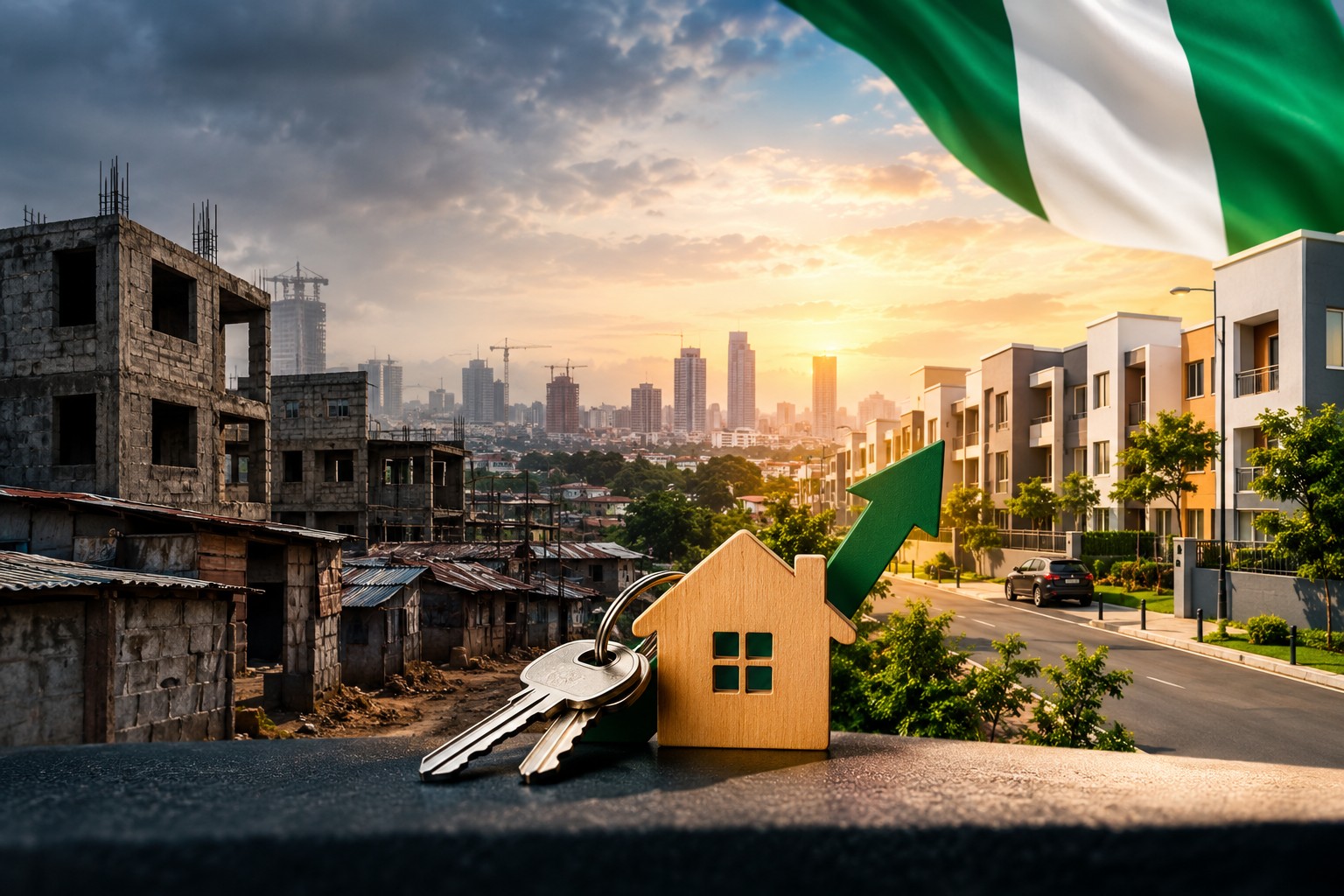
Nigeria’s Housing Crisis: Why Affordable Housing Could Be the Biggest Real Estate Opportunity
Nigeria does not have a shortage of people who need homes.
It has a shortage of homes that many people can actually afford.
That distinction is at the centre of the country’s housing challenge.
Nigeria’s housing deficit remains a major structural issue. Current 2026 reporting puts the gap at roughly 15 million units according to government-linked estimates, while other industry estimates are considerably higher depending on methodology. (dandc.eu)
Whatever figure is used, the underlying reality is clear:
Nigeria needs significantly more housing.
The bigger challenge is producing housing at prices that match the purchasing power of ordinary Nigerians.
Housing demand remains structurally strong
Nigeria’s population continues to grow and urbanisation continues to place pressure on major cities.
Lagos is a clear example.
People move towards economic centres because of jobs, education, business and opportunities.
As more people need accommodation, demand for housing naturally increases.
But supply has not always kept pace.
This imbalance contributes to rising rents and property prices.
Why affordable housing matters
Luxury developments often receive the most attention because they are visually attractive and generate strong marketing content.
But the biggest market opportunity may lie elsewhere.
Nigeria has millions of potential homeowners and tenants who need:
Functional homes at realistic prices.
That means developers who can deliver affordable or mid-market housing at scale may be addressing one of the country’s most important real estate needs.
Construction costs make the problem harder
Affordable housing sounds simple until the developer begins construction.
Land costs money.
Cement costs money.
Steel costs money.
Labour costs money.
Infrastructure costs money.
Financing costs money.
The CBN’s Monetary Policy Rate was 26.5% following its July 2026 MPC decision, illustrating the broader high-cost financing environment facing the economy. (Central Bank of Nigeria)
These conditions can make development more expensive and reduce the number of buyers who can afford mortgages or new homes.
The opportunity may be in smaller, smarter housing
Affordable housing does not necessarily mean low-quality housing.
It can mean:
* Efficient use of space
* Smaller units
* Flexible payment plans
* Phased development
* Infrastructure-sharing
* Strategic locations
* Better construction efficiency
The objective is to create housing that people can realistically afford while still delivering a safe and functional living environment.
Rental housing is also part of the solution
Not everyone is ready to buy.
This creates an opportunity for investors who develop rental properties aimed at Nigeria’s growing middle-income and working population.
The most attractive rental property may not necessarily be the most luxurious.
It may be the property that provides:
Good location + reasonable rent + reliable infrastructure + accessibility.
Nigeria’s housing crisis is not simply a social challenge.
It is also a major real estate investment opportunity.
The country needs housing, but it particularly needs housing that ordinary workers and families can afford.
As the population grows and urbanisation continues, developers and investors who understand affordability, location and real housing demand may be better positioned to participate in the next phase of Nigeria’s property market.
The future of Nigerian real estate will not only be about building more houses.
It will be about building the right houses for the right market at the right price.

Leave a Reply
You must be logged in to post a comment.